Walking Pad vs Treadmill: Which Should You Buy in 2026?
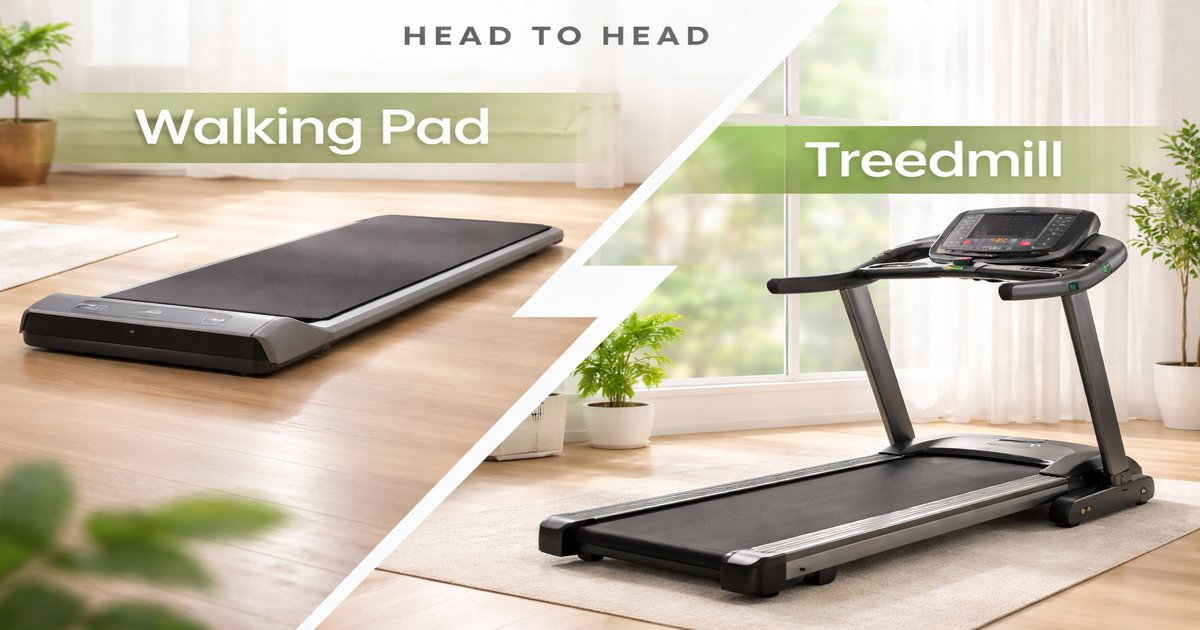
You’re stuck at home, juggling work, kids, and everything else life throws your way. The gym seems like a distant dream, but you still want to stay active. Enter the walking pad and treadmill, both promising a way to keep moving without leaving home. But which one actually fits your lifestyle?
| Feature | Walking Pad | Treadmill |
|---|---|---|
| Max Speed | 4 mph | 12 mph |
| Foldability | ✓ | Partial |
| Weight | 55 lbs | 200 lbs |
| Incline | ✗ | ✓ |
| Price Range | $300-$600 | $700-$2000 |
| Noise Level | Low | Moderate |
✅ walking pad Pros
- Compact and space-saving; easily stored under a bed or desk.
- Quiet operation, perfect for small apartments or shared spaces.
- Lower cost, making it a budget-friendly option for light workouts.
❌ walking pad Cons
- Limited speed, not suitable for running or high-intensity workouts.
- No incline feature, restricting workout variety.
- Less durable construction compared to full-size treadmills.
✅ treadmill Pros
- High-speed capability, supporting both walking and running.
- Incline options for more intense workouts and muscle targeting.
- Sturdier build, designed to withstand regular, heavy use.
❌ treadmill Cons
- Bulky and heavy, requiring significant space to set up.
- More expensive, potentially a big investment for casual users.
Performance: Speed and Intensity
If you’re after a sweat-drenched run, the treadmill is your go-to. With speeds up to 12 mph, it’s built for high-intensity workouts, offering flexibility from brisk walks to sprints. On the flip side, the walking pad caps at 4 mph, ideal for leisurely strolls or for keeping your steps up while you work. It’s perfect for those who want to sneak in some light exercise during a hectic day, but don’t expect it to replace your running sessions.
Build Quality and Space Efficiency
Treadmills are tanks. They’re built to handle the pounding of running feet day after day, which means they’re heavier and take up more space. If you’ve got a dedicated home gym or spare room, great. But if you’re trying to fit a workout into a small apartment, the walking pad is a game-changer. Its compact design lets you slide it away when not in use, keeping your living space uncluttered.
Value for Money
The walking pad shines when it comes to affordability. Perfect for casual walkers or those new to home workouts, it offers a great entry point without breaking the bank. On the other hand, a treadmill is an investment. You pay for the durability and features, but unless you’re committed to regular use, you might be better off saving your cash. Consider how often you’ll use each feature before deciding.
Walking pads aren’t built for long-distance training or high-intensity interval workouts. Their construction can feel flimsy if you’re used to the robust nature of gym equipment. Treadmills, while powerful, can be a noise nuisance and often require more maintenance than you’d expect—especially if you’re clocking serious miles.
Our Final Verdict: Which One Should You Buy?
If you’re a casual exerciser or need a fitness solution that fits seamlessly into a small living space, the walking pad is your answer. It’s affordable, quiet, and easy to store. However, if you’re serious about your cardio, need speed and incline options, and have the space to accommodate it, a treadmill is worth the investment. Ideal for dedicated runners or those looking to replicate a gym experience at home.
Is a walking pad suitable for running?
No, walking pads are designed for low-speed, low-impact activities. If you want to run, a treadmill is a better option.
How much space do I need for a treadmill?
You’ll need a dedicated area, ideally a room with about 8’x10′ of space, to accommodate the treadmill and ensure safe usage.
Are walking pads durable?
While walking pads are great for light use, they aren’t as durable as treadmills. Consider your usage level when deciding.